Assurance
Hong Kong law requires companies to maintain financial records and engage CPAs for statutory audits. We deliver independent assurance that supports compliance and stakeholder confidence.
Three principles, every engagement.
Audit procedures are designed to obtain sufficient and appropriate evidence to support an auditor's opinion. Although procedures may vary based on the company's nature and risk profile, the philosophy behind them remains constant: professional scepticism, independence, and evidence‑based verification.
Understanding the Business and Internal Controls
The auditor begins by understanding how the company operates, how transactions flow, and what controls exist. This allows the auditor to identify where misstatements may occur and design audit procedures accordingly.
Risk Assessment
Risks of material misstatement are identified at both financial statement and assertion levels. Audit work then focuses on the areas that carry the highest risk.
Substantive Testing
This includes testing samples of transactions, reviewing supporting documents, verifying account balances, and confirming information with third parties. The goal is to verify that recorded amounts are accurate and valid.
Analytical Review
Auditors analyse trends, ratios, and relationships within financial data. Unexpected or unexplained changes may indicate issues requiring deeper investigation.
Cut‑Off and Completeness Checks
Key procedures ensure that revenue and expenses are recorded in the correct period and that all required transactions are captured.
Evaluation of Estimates and Judgements
Auditors assess the reasonableness of management's assumptions for areas such as provisions, impairments, or fair value measurements.
Final Review and Reporting
All findings are evaluated to determine whether the financial statements are presented fairly. This forms the basis of the audit opinion.
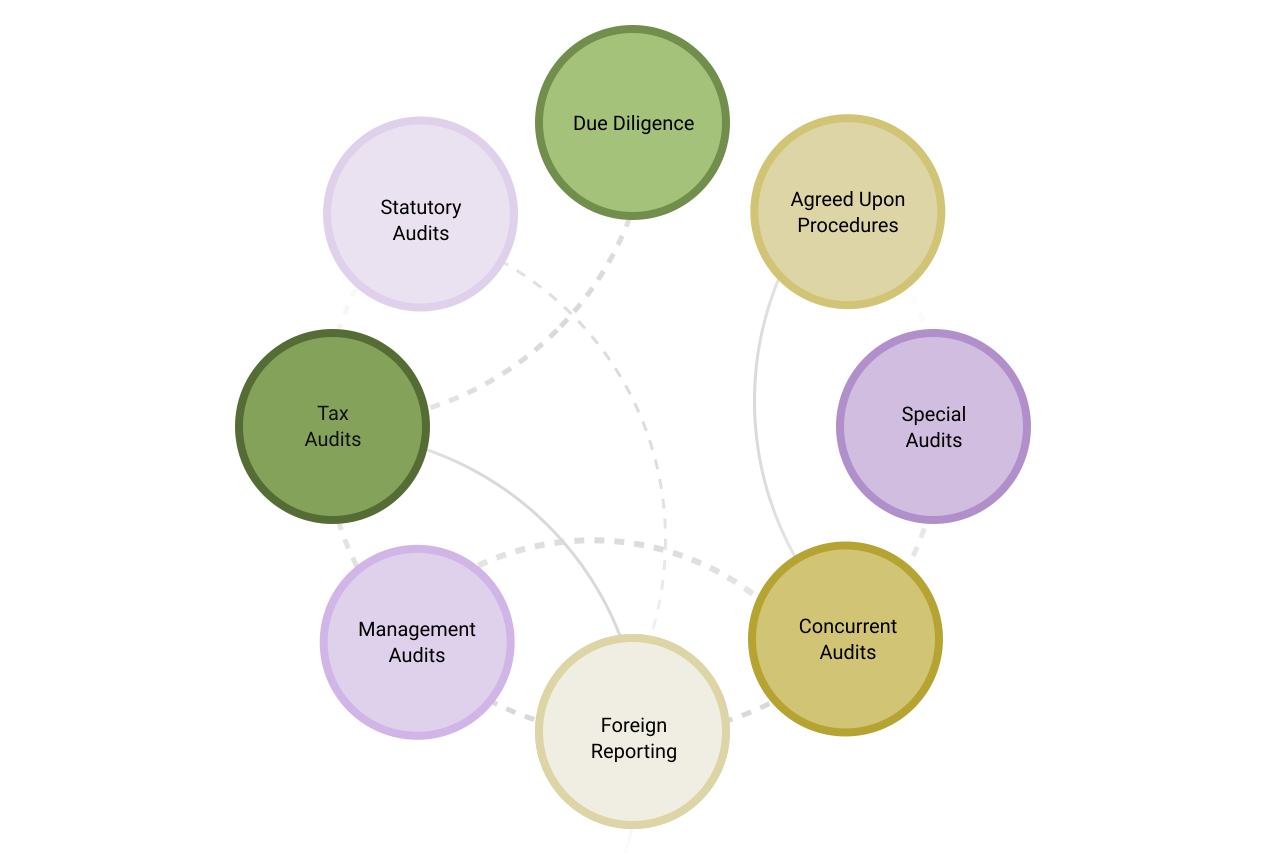
Two pillars: statutory audits and the work that surrounds them.
External Audit
An external audit is an independent examination of a company's financial statements conducted in accordance with recognised auditing standards. Its purpose is to determine whether the financial statements present a true and fair view of the company's financial position and performance. Through detailed testing, analytical review, and evaluation of internal controls, an external audit provides stakeholders — shareholders, management, lenders, and regulators — with confidence in the reliability and integrity of the company's reported information. For clients unfamiliar with the audit process, we ensure full transparency and guide them through each stage, making the requirements understandable and the overall process controlled and predictable.
- Statutory audits under IFRS & SME-FRS
- Individual & consolidated financial statement audits
- Group reporting package audits
Other Assurance
Other assurance services involve independent evaluations of specific financial or non‑financial information outside the scope of a statutory audit. These engagements may include regulatory audits, special audits, capital verification, certification work, and agreed‑upon procedures. The objective is to provide a level of assurance — often limited or specific to certain areas — regarding the accuracy, completeness, or compliance of defined information. These services are especially valuable when organisations require verification for regulatory bodies, investors, or internal governance purposes, and they provide a focused, credible assessment without requiring a full statutory audit.
- Special/regulatory audits & capital verification
- Certification reports
Explore alongside Assurance


Tax
Comprehensive tax compliance and advisory, ensuring accurate filings and optimized tax positions for businesses and individuals.


Consulting
Strategic advice tailored to the objectives, enhancing efficiency and supporting sustainable growth.


HR
Practical HR support for payroll, MPF, recruitment, and visa needs ensuring compliance and operational efficiency.